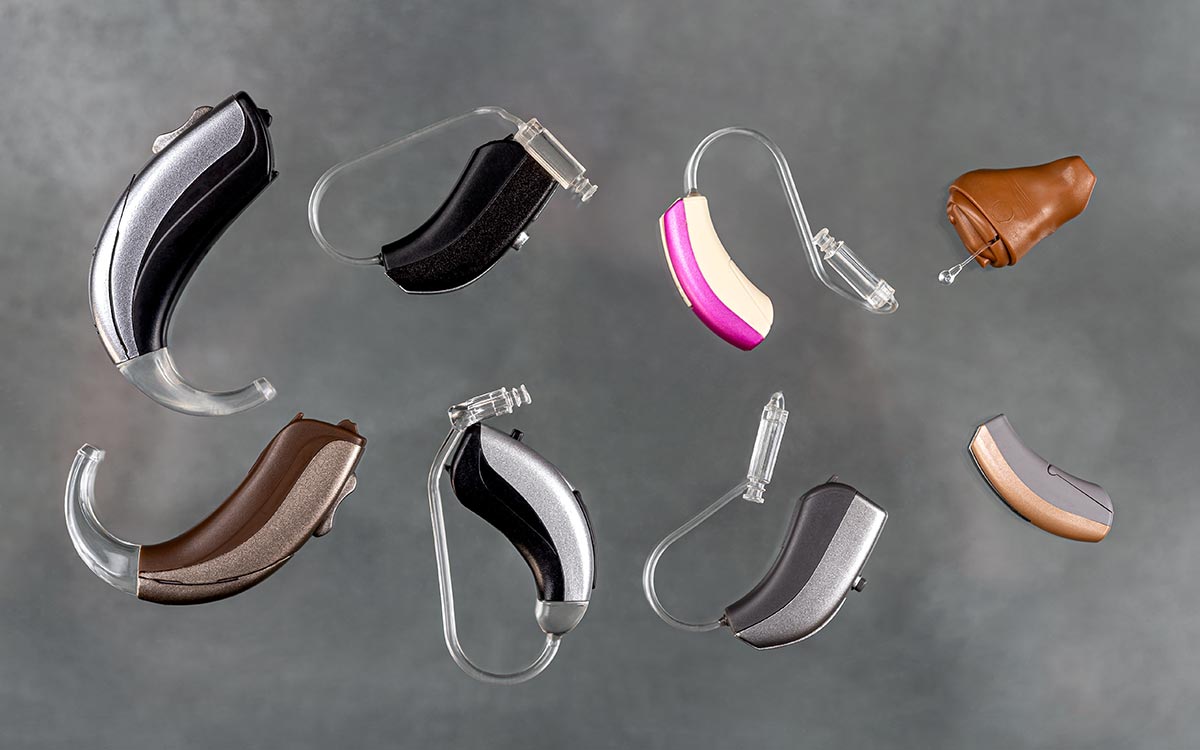
The sheer amount of hearing aid designs and technology levels on the market today can make the selection process feel complicated. Fortunately, there is an ideal hearing solution for every person, regardless of their lifestyle or the severity of their hearing loss. The key is simply choosing the one that fits you best.
Understanding the differences among the most common types of hearing aids can help you feel more informed and confident as you explore your options. We are planning to analyze the primary styles available today to help you understand what sets each option apart.
ITC (In-the-Canal) Hearing Systems
Basic Overview:
ITC hearing aids rest partially in the ear canal, with an inconspicuous portion visible at the outer ear.
Why people choose them:
- Provides an understated appearance compared to traditional styles
- Tailored to the unique shape of your ear
- Suitable for mild to moderate hearing loss
First-time wearers frequently gravitate toward ITC aids because they strike a perfect compromise between size and performance.
IIC (Invisible-in-Canal) Technology
Core Characteristics:
These are the tiniest custom-made devices on the market today. They are placed deep within the canal to remain hidden from view.
Primary Incentives:
- Offers the most subtle look of any hearing aid style
- Natural sound quality due to microphone placement
- Designed for comfort with an incredibly small footprint
IIC devices are primarily targeted at patients with moderate hearing needs who want their technology to remain completely unnoticed.
In-the-Ear (ITE) Hearing Aids
Product Details:
An ITE hearing aid fits snugly within the outer ear, available in both full-shell and half-shell configurations. The shell is uniquely formed to the specific contours of your individual ear.
Why users favor ITE:
- Increased size allows for more features and longer battery life
- Easier to manage for those with dexterity challenges
- Effective for a wide spectrum of hearing impairments, ranging from mild to severe
Many patients pick ITE devices because they provide a streamlined, self-contained design that doesn’t hook over the ear.
BTE (Behind-the-Ear) Essentials
Description:
Placed firmly on the back of the ear, BTE models sit on the outer ridge. These models use an individualized earmold or tubing to direct sound inside.
Key Strengths:
- Regarded as one of the most dependable and sturdy designs available
- Effective for nearly every level of hearing impairment
- Large enough to house sophisticated software and modern rechargeable technology
BTE devices are an excellent choice for individuals seeking reliability, ease of use, and strong amplification.
RIC (Receiver-in-Canal) Overview
Design Specs:
While they resemble BTE units, RIC aids set the speaker directly in the canal for better sound delivery.
Key Benefits:
- Provides an exceptionally clear and lifelike listening experience
- Users appreciate the slim design and comfortable fit for all-day use
- An adaptable choice that works for various degrees of auditory needs
RIC units are extremely popular today because they balance appearance with powerful functionality.
Extended-Wear Device Facts
What they are:
These unique devices are built to live in the ear canal for a month or more, managed by your hearing specialist.
User Incentives:
- No routine insertion or removal
- Sitting low in the ear makes them completely hidden from view
- You can go about your entire life—including sports and rest—while wearing them
These models are the best choice for a low-maintenance, seamless hearing experience.
Smart Hearing Aids with Bluetooth
Functionality:
Hearing aids with wireless connectivity that sync with smartphones, tablets, computers, and sometimes TVs.
Modern Perks:
- Enjoy direct sound streaming from your phone or TV right into your ears
- Provides an unobtrusive method to manage your hearing environment from your mobile screen
- Perfectly suited for the requirements of an advanced, connected individual
You can locate Bluetooth capabilities built into a variety of form factors, from RIC and BTE to custom ITC designs.
Alternative Surgical Options
Procedure Information:
A surgical method that works by vibrating the tiny bones inside the ear to provide amplified audio.
Who they are for:
- Provides an answer for patients with anatomy that prevents the use of conventional aids
- This is a specialized alternative for those with chronic ear canal sensitivity.
Middle-ear implants are typically suggested only after an exhaustive evaluation by an ENT specialist.
Choosing the Right Style for Yourself
There is no one single “best” hearing aid; rather, there is an optimal one for you, determined by your medical needs and personal comfort. By consulting a specialist, you can investigate various models and see which one feels most natural to you.
Begin your path to clearer sound by setting up an auditory test now. This simple step is the basis for improved hearing and better connections with those around you.
Sources:
https://www.mayoclinic.org/diseases-conditions/hearing-loss/in-depth/hearing-aids/art-
20044116
https://www.hearinglife.com/hearing-aids/types
https://www.nidcd.nih.gov/health/hearing-aids