When your hearing feels dampened, it can impact your daily routine and leave you feeling withdrawn from your environment. Many people instinctively worry they’re experiencing irreversible hearing loss when, in reality, the culprit may be something much more basic: cerumen accumulation.
Recognizing how to identify these differences guarantees you seek the correct care, whether that is safe wax removal or a clinical hearing test. There is no reason to feel overwhelmed if auditory inputs seem muted. While only a clinician can verify the cause, understanding these key indicators of earwax vs. auditory decline can provide immediate insight.
What Earwax Buildup Feels Like
Your canals produce wax as a natural defense process to maintain integrity and keep debris away from the eardrum. Issues arise when too much wax builds up or becomes clogged.
Frequent signs of earwax buildup include:
- Dampened sound quality that manifests over time or overnight
- The sense that there is a physical plug in the ear
- Overall ear irritation or mild aching
- Buzzing in the ear (tinnitus)
- Instances of sharper hearing following a jaw stretch or eating
A hallmark of wax-induced sound fluctuations is asymmetry, typically impacting one side over the other. The positive aspect is that professional clearance typically ends in an immediate restoration of your original hearing levels.
How Auditory Loss Usually Manifests
Hearing loss, particularly presbycusis or trauma-based hearing loss, has a tendency to develop gradually and doesn’t improve when the ear is cleaned.
Indications of irreversible auditory decline often feature:
- Battling to track discourse when background noise is present
- Regularly needing clarification during normal dialogue
- Adjusting electronic device levels to a level that people find too loud
- Reduced sensitivity to high-frequency auditory input
- Hearing equally reduced on both sides
A key distinction is that actual loss lacks the physical “plugged” feeling that accompanies an earwax impaction.
Contrasting Wax Buildup and Hearing Loss
By analyzing the timing and specific symptoms, you can often identify which issue is impacting you:
- Timeline: Cerumen muffling can be rapid, but permanent loss takes decades
- Permanence: Clogs are a quick fix, while sensorineural loss requires long-term management
- Sensations: Fullness and discomfort indicate wax; speech clarity challenges indicate loss
- Laterality: Wax often affects a single ear; hearing loss frequently impacts each
The Dangers of DIY Cerumen Removal
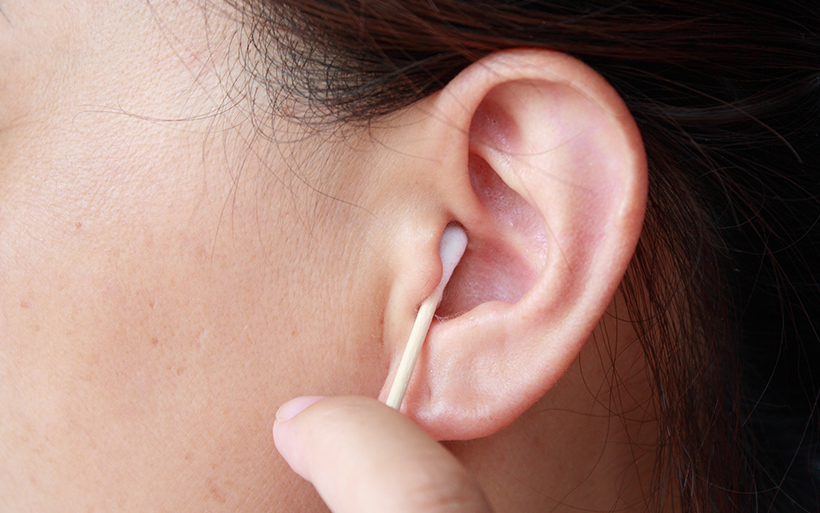
It’s tempting to presume earwax is the culprit — and grab for cotton swabs or over-the-counter kits. Using external items typically shoves the plug further into the ear, increasing the danger of trauma.
Clinical research indicates that self-cleaning often leads to unintended injury or increasingly difficult-to-treat impactions.
In the same way, neglecting early hearing loss can delay care that helps in preserving communication, security, and quality of life.
Ways a Clinical Exam Assists
A clinician can employ an earlight to immediately see if a mechanical blockage is visible.
If cerumen is present, clinical extraction often clears signs on the spot.
If no wax is found, a diagnostic audiogram will be conducted to map the type and extent of any underlying loss.
Clinicians urge an immediate hearing check if you begin failing to interact or manage your surroundings.
Closing Thoughts on Earwax and Hearing Health
Muffled hearing doesn’t necessarily mean permanent trauma.
In many cases, earwax buildup is the source, and it’s extremely treatable.
Obtaining professional care guarantees you find the specific cause and the proper solution for your hearing requirements.
In the end, an expert exam is the only reliable way to differentiate between a temporary blockage and a lasting shift.
Addressing the issue immediately halts the anxiety of the unknown and places you on the track to improved hearing.
If your auditory sense seems diminished, don’t guess. A brief exam can make all the difference, so reach out to our team of clinicians today.