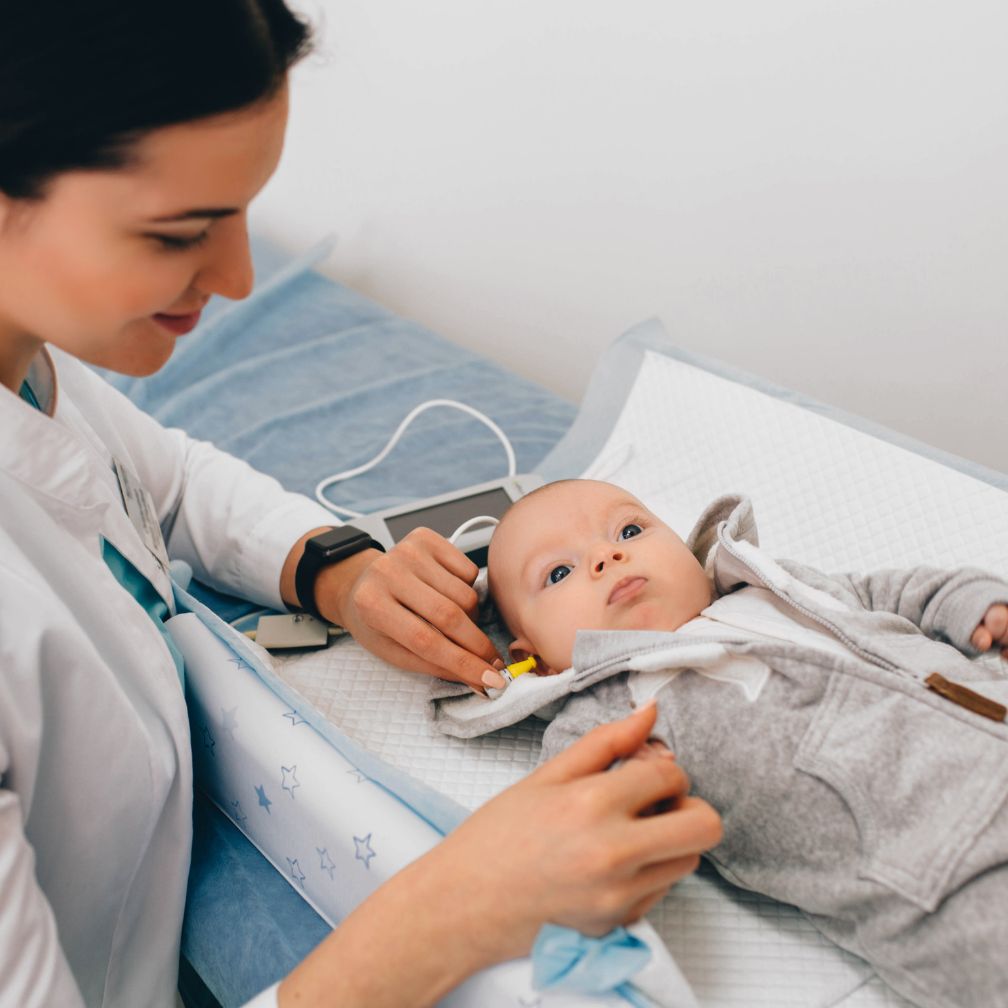
For new parents, discovering that their infant experiences auditory deficits can feel deeply shocking and distressing. However, the optimistic truth remains that via rapid evaluation and proper care, babies experiencing hearing issues will routinely thrive. Clearly, such children consistently gain speech capabilities, relational skills, and strong connections across their social sphere, building toward a prosperous life!
Utilizing individual hearing aids alongside surgical cochlear implants provides two highly successful approaches for supporting infants with hearing loss. Throughout this resource, we examine their operational methods to assist you in choosing the optimum pathway for your infant.
Grasping the Basics of Pediatric Hearing Loss
Hearing loss in infants routinely stems from a wide array of factors, including:
- Specific hereditary genetic markers (even absent any known parental history)
- Dangerous maternal congenital infections like cytomegalovirus (CMV) or rubella infection
- Complications during birth, such as lack of oxygen or premature birth
- Certain medications administered within modern neonatal intensive care units
The single most critical action? Prompt clinical identification. Consequently, infants within American hospitals complete screening procedures before leaving the care nursery. Specialized pediatric hearing clinicians consistently enforce the official “1-3-6” intervention timeline:
- Primary screening completed within 30 days of birth
- Confirmed hearing diagnosis finalized prior to 3 months post-birth
- Early therapeutic care (utilizing personal devices or developmental therapy) started by 6 months of age
Hitting these clinical targets provides infants an exceptional path toward healthy speech, expressive language, and cognitive development. Should you desire guidance concerning these newborn checks, your family pediatrician will gladly offer support!
Understanding Amplification Devices for Infants
When managing infants presenting with mild to severe hearing deficits, personal hearing aids regularly act as the frontline therapeutic choice. These miniature, body-worn units amplify surrounding audio, helping babies process spoken dialogue and everyday sounds more distinctly.
Current pediatric hearing aids function as:
- Exceptionally safe for clinical use in babies merely weeks post-birth
- Engineered featuring soft, flexible ear impressions that adjust seamlessly as the baby grows
- Outfitted with child-resistant battery compartments and child-focused protective features
- Expertly tuned by a licensed pediatric audiologist to target your infant’s unique hearing profile
While your infant develops, these devices demand ongoing professional tuning to ensure snug placement and precise amplification.
Understanding Cochlear Implantation for Babies
When a baby presents with profound sensorineural hearing deficits that fails to respond adequately to conventional hearing aids, a cochlear implant may be recommended. Diverging significantly from traditional hearing devices, surgical cochlear implants:
- Require surgical placement within the inner ear
- Safely bypass damaged structures of the inner ear system
- Convert surrounding audio into precise electrical signals that excite the acoustic nerve pathways directly
Precision-implanted cochlear devices remain:
- Clinically cleared by the FDA for babies as young as 9-12 months of age
- Uniquely successful when paired with early intervention and consistent family engagement
- Sanctioned strictly following an exhaustive clinical evaluation performed by an audiologist alongside an ENT physician
That multi-step journey involves imaging, hearing tests, and detailed consultations regarding anticipated long-term progress.
Comparing Hearing Aids and Cochlear Implants: Key Differences
- Mild to severe hearing loss: Hearing Aids; Severe to profound hearing impairment calls for Cochlear Implants
- Non-Invasive acoustic positioning: Hearing Aids; Invasive surgical installation: Cochlear Implants
- Acoustic volume boosting: Hearing Aids; Converts Sound Electrical Signals: Cochlear Implants
- Fitting starts at early infancy: Hearing Aids; Placement starts at 9-12 months: Cochlear Implants
Final Takeaways: Navigating Infant Hearing Solutions
If your baby has been diagnosed with hearing loss, you have access to outstanding technological paths and compassionate guidance. Thanks to collaboration with dedicated pediatric audiologists, countless infants successfully cultivate language development completely comparable to their healthy peers.
Whether your youngster qualifies for external hearing aids or surgical cochlear implants, early intervention delivers permanent lifelong benefits.
Do you need professional advice regarding your baby’s current hearing health? Contact our staff today to arrange a comprehensive evaluation and customized treatment program.