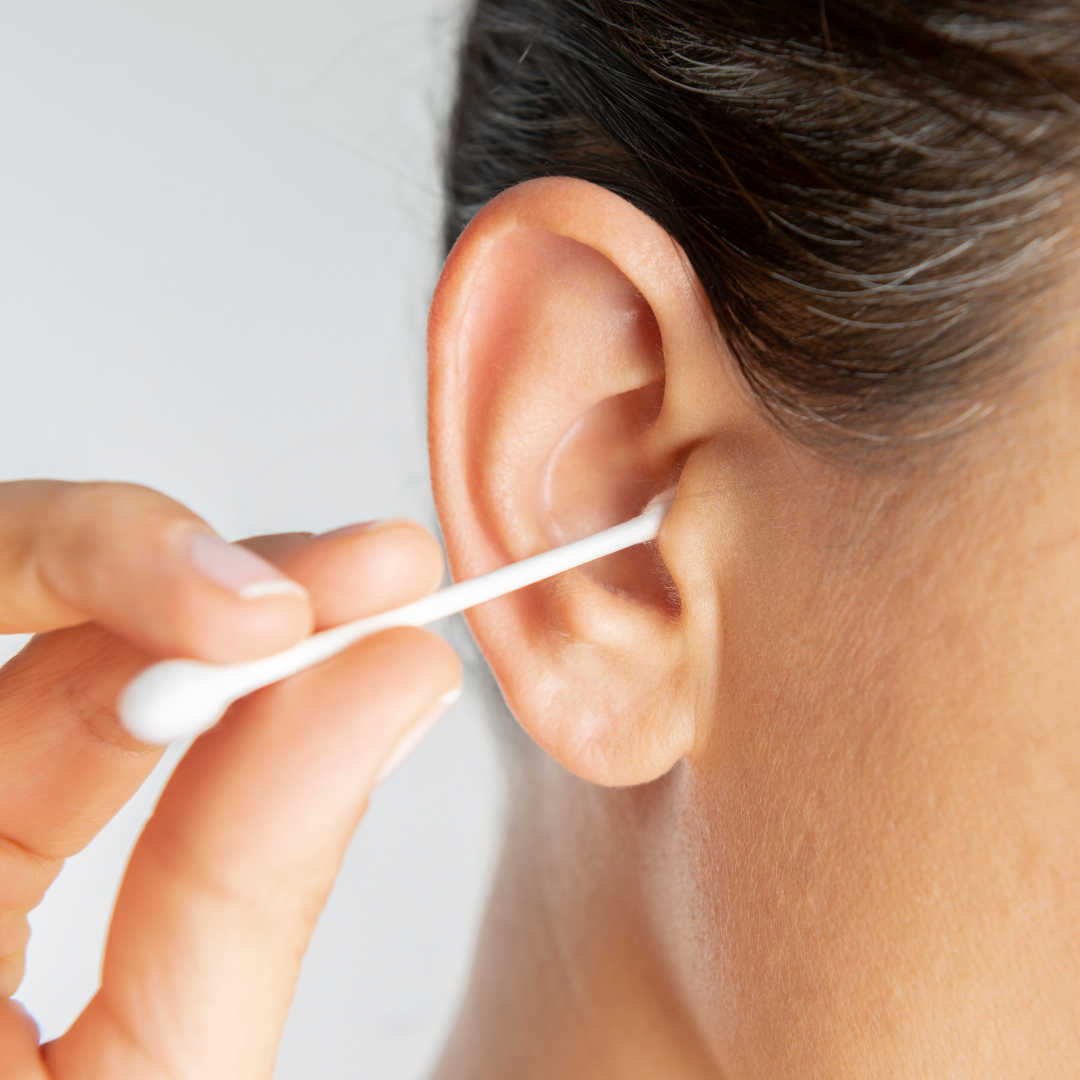
Although cotton swabs appear to offer an easy hygiene solution, pushing them into the ear canal often worsens wax accumulation and risks tissue trauma. We assess whether your earwax demands professional intervention and provide customized care strategies that match your clinical profile. Healthy ears rarely require aggressive manual intervention; nevertheless, when blockage develops, we assist patients in safely extracting excess cerumen.
What Makes Q-Tips Harmful to Ear Health?
Biologically, earwax—known clinically as cerumen—is not an unhygienic waste product. Cerumen collects particulate matter, inhibits microbial proliferation, moisturizes the epithelial lining, and shields sensitive canal tissues. Standard jaw mechanics and lateral skin shedding propel oxidized wax toward the outer meatus, allowing it to dry and wash away during daily washing.
A Q-Tip placed inside the canal can disrupt this self-cleaning process. While you may see a tiny amount of wax on the swab, the device generally shoves the rest deeper toward the eardrum. Ongoing cotton swab use regularly condenses wax into a solid obstruction, causing a congested feeling that drives repetitive cleaning attempts.
Cotton applicators are suitable for tracing the exterior folds of the ear, but they must remain entirely outside the canal opening.
Mechanical Trauma: Risks of Cotton Swabs in the Ear
Canal skin is thin, vascular, and highly vulnerable to mechanical abrasions. Tiny skin lacerations provoke pain and bleeding while forming entry pathways for pathogens, multiplying the chance of external ear infections. There is also a risk that the cotton tip will detach and become stuck deep inside the auditory canal.
Documented injuries associated with cotton swabs include:
- Earwax pushed into a deeper impaction
- Cutaneous tearing, swelling, canal inflammation, or bleeding
- Acute otitis externa or canal infection
- Foreign body retention including detached cotton fibers
- Ruptured, torn, or perforated tympanic membrane
- Ossicular chain disruption or damage behind the tympanic membrane
- Transient hearing reduction or permanent sensorineural loss
- Onset of tinnitus, positional dizziness, or acute ear pain
Even though major trauma is uncommon, someone bumping your arm, a sudden hand slip, or deep over-insertion can cause severe damage.
Recommended Schedules and Timelines for Cerumen Removal
For the average individual, scheduled cerumen removal is completely unnecessary. Normal anatomical mechanisms steadily push cerumen toward the exterior, where regular washing rinses the visible concha. Scrubbing too frequently dehydrates the auditory passage, causes persistent irritation, and raises risks for secondary infections or blockages.
Extraction is medically indicated when cerumen fully occludes the lumen, blocks visual examination of the eardrum, compromises hearing aid function, or induces pain.
Safe and Approved Home Techniques for Earwax Care
In the absence of earwax symptoms, allowing natural physiological clearance is universally the safest strategy. Gently wipe the outer ear surface with a damp washcloth and allow internal self-cleaning mechanisms to work.
When wax needs softening, we may recommend an over-the-counter cerumen-removal product or drops containing ingredients such as mineral oil, glycerin, saline, or carbamide peroxide. Apply only the specified dosage and never exceed the designated application duration outlined on the label. Discontinue administration immediately if the solution sparks pain, severe dizziness, skin rash, or worsening ear fullness.
Home flushing is contraindicated in many cases and should solely be conducted after an expert confirms safety and reviews proper methods. Absolutely avoid using high-velocity dental water jets inside your auditory canal. Do not use dangerous devices like ear candles, metal scrapers, endoscopic camera tools, hairpins, or unverified suction units. These products may burn, cut, puncture, or push wax farther inward.
When Should I See a Doctor for Earwax Removal?
Set up an audiological evaluation whenever your ear stays plugged after softening care, wax is firmly impacted, or home efforts fail repeatedly. Expert removal is the safest path for patients who struggle to hold still, individuals with narrow ear canals, hearing aid wearers, or those with surgical contraindications to irrigation.
Request an immediate diagnostic examination for:
- Persistent otalgia, stubborn itching, or painful sensitivity around the ear
- Blood, cloudy purulence, clear fluid leaks, or foul-smelling ear discharge
- Fever combined with visible swelling or redness around the ear
- New acoustic tinnitus sounds or unstable balance sensations
- Sudden hearing drops or auditory deficits that remain after wax removal
- Concern regarding a perforated eardrum or foreign cotton debris
- Chronic cerumen impactions that clog or disrupt hearing aids
Any rapid-onset hearing loss in one ear must be evaluated as an emergency rather than dismissed as a wax plug. Prompt testing can distinguish a blockage from a time-sensitive inner-ear problem.
In-Office Procedures for Clearing Earwax Blockages
The clinical process starts with high-magnification otoscopy or microscopy to establish cerumen presence and screen for infections, abrasions, or tympanic perforations. The ideal extraction strategy is dictated by the consistency of the wax, ear canal dimensions, clinical background, past ear procedures, and patient physical stability.
Standard clinical removal options include:
- Wax-softening drops before or during the appointment
- Controlled ear flushing using warm, body-temperature water on intact eardrums
- Gentle suction under direct visualization
- Mechanical extraction using sterile ear loops, specialized curettes, or micro-forceps
Continuous visual monitoring enables the practitioner to navigate around sensitive epithelial tissue and pause immediately if discomfort arises. Resolving highly compacted or dry earwax often involves integrating multiple clinical removal techniques. After removal, the ear can be reexamined to confirm that the canal and eardrum are healthy. If post-cleaning symptoms such as fullness, tinnitus, unsteadiness, or hearing reduction persist, specialized testing can locate the primary cause.
Request an Appointment for Clinical Earwax Removal
Should your ears feel congested or your hearing performance decline, arrange an evaluation with our audiology clinic instead of reaching for swabs. During your consultation, we examine current symptoms, prior ear surgeries, hearing aid habits, home remedies, and physiological factors that drive wax accumulation. Contact us now to schedule an appointment for comprehensive, expert earwax removal.